In planning terms, when it can’t be relied on.
Sustainability sits at the heart of decision-making, yet in rural areas it often hinges on something surprisingly fragile – the future of a subsidised bus service. Recent appeal decisions have highlighted just how precarious that reliance can be.
The Policy Context and Rural Reality
Paragraph 110 of the National Planning Policy Framework (NPPF) draws a distinction between urban and rural locations. But what happens when the sustainability of a site depends entirely on a bus service that may not exist in two years’ time?
That question has been central to two appeals we have been involved in on behalf of South Gloucestershire Council (SCG). Both cases have revolved around buses, and whether their uncertain future meant that proposed housing sites could truly be regarded as sustainable.
The term ‘sustainable’ is undefined so each application must be determined on its own merits. It’s a concept that has been around for decades and we are sometimes none the wiser!
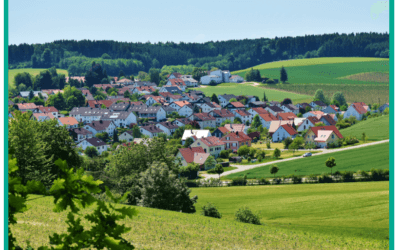
SCG falls with the West of England Combined Authority Area (WECA). WECA are responsible for delivering the bus services across the area. The appeal sites are located in rural villages where services have historically been supported through rural bus grant funding. When that funding was withdrawn, some routes were terminated, leaving communities increasingly isolated and heavily reliant on the private car.
From Fixed Routes to Flexible Buses and DDRT
In response, various initiatives have sought to maintain community connectivity. Most recently, the Department for Transport (DfT) has facilitated trials of Dynamic Demand Response Transport (DDRT). In essence, this is a flexible, app-based bus service without a fixed route, adapting instead to passenger bookings in real time. It’s closer in operation to a shared taxi model, with multiple drop offs, than a traditional bus route.
However, current funding is only secured until April 2026. Beyond this date, the future of subsidised rural routes and DDRT in particular remains uncertain.
What the Appeal Decisions Tell Us
Both appeal decisions demonstrate a critical point: without certainty over long-term provision of bus services in rural areas, it is difficult to conclude that a site is sustainably located. A site may appear sustainable today, but without firm and enduring commitments to public transport provision, that sustainability may be short lived – particularly once the new housing is delivered and occupied.
Funding Boost – But for How Long
It has recently been confirmed that WECA has secured a further £42.4m to support bus services across the area. That is undoubtedly positive news, but the distribution of that funding has yet to be announced. However, if rural bus services remain dependent on time-limited funding pots, can they ever really be considered to be sustainable in planning terms?
It is a question yet to be definitively tested at appeal – though we suspect it will not be long before a decision squarely addresses it.
A National Issue
This issue is by no means unique to South Gloucestershire. Many Authorities across the country benefit from similar funding streams and operate their own versions of DDRT, including in our Hertfordshire home base.
How We Can Help
If you would like to discuss the nuances arising from these appeal decisions or explore how transport sustainability may affect a site you are promoting, we would be very happy to assist.