










Frequently Asked Questions
Find your answers here
What is the Local Planning Authority
The Local Planning Authority or LPA is the department at your local Council that is responsible for making policies for the area and deciding planning applications. It also deals with breaches of planning control.
What is a planning consultancy
A planning consultancy comprises planning consultants who are qualified town planners and act on behalf of local residents, developers or interested parties in either promoting or objecting to development.
This could be via a planning application or appeal, or taking part in Local Plan Examination processes.
What is the Planning Inspectorate
Acting on behalf of the Secretary of State for Levelling Up, Housing and Communities, the Planning Inspectorate (PINs) is an independent body that handles and decides appeals made against a decision of the Local Planning Authority.
How can a town planner help
A town planner (aka planning consultant) provides specialist knowledge on planning matters. They will advise and guide you through the nuances of the planning process, and give guidance on the acceptability or otherwise of a proposed development or potential success for an appeal.
In addition, a planner will guide you through the Local Plan process whether it is promoting or objecting to a proposed site allocation or any other part of the Emerging Local Plan.
What is the difference between a town planner, architect and surveyor
A town planner provides specialist advice about planning, which includes policy, legislation and case law around development.
A town planner will guide you through the planning process and advise on the key considerations for a development, including any supporting technical work needed.
They act as agent on applications submitted on your behalf and liaise with their counterparts at the Local Planning Authority (LPA) during the determination of an application.
At Barker Parry, we work with LPAs across the country and our experience makes us very well placed to understand what development proposal will deliver the highest chance of success.
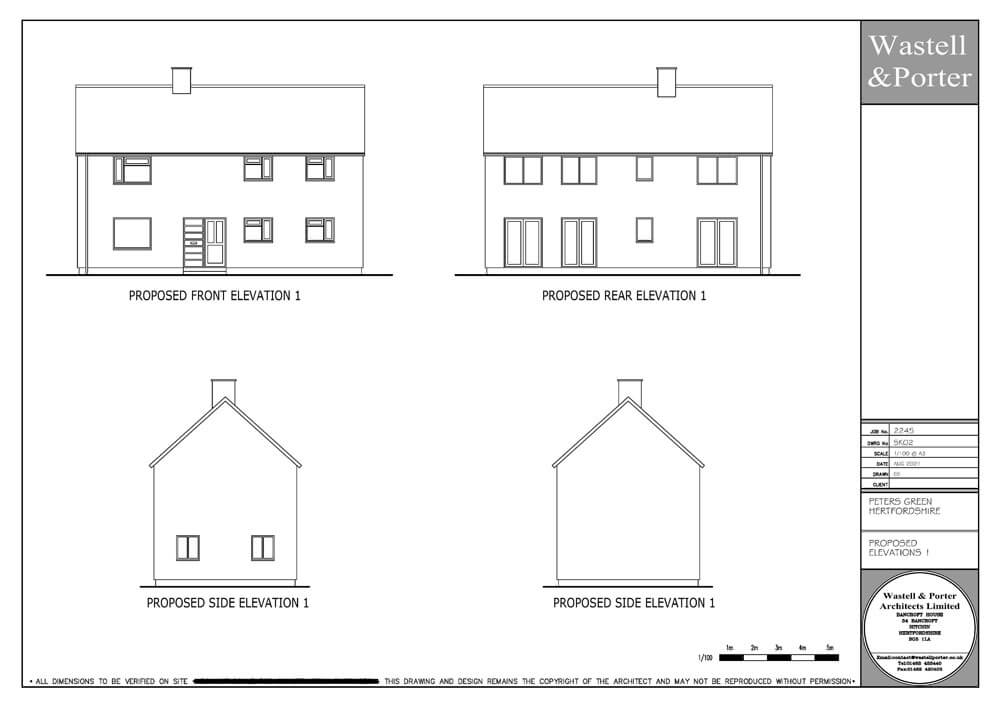
An architect will produce plans for the proposed scheme. Some will offer planning services, with quotes to submit applications and act as an agent on your behalf. For smaller schemes, particularly householder proposals, this may be more cost effective. Architects, however, are not usually as well versed on legislation, process and case law as a planner.
A surveyor will provide you with advice on the structural stability of a building or whether something can physically be constructed. They can provide engineering drawings.
What is the difference between Residential and Householder.
Residential refers to the construction of a new dwelling(s) where full planning permission would be required. Householder relates to any development associated with an existing dwelling and any associated alterations or extensions. If you wish to demolish an existing dwelling and re-build it, this would fall under residential rather than householder.
What does the Letchworth Garden City Heritage Foundation do
The Letchworth Garden City Heritage Foundation is the largest landlord in Letchworth. It maintains responsibility for much of the commercial property in the area and the freehold of many residential properties. With the exception of a small number of properties in the town, separate consent is required from the Foundation for any works proposed to properties.
The Heritage Foundation is more stringent in its design criteria than the Local Planning Authority, such that you may be better obtaining its consent prior to planning permission.
What is the Welwyn Garden City Estate Management Scheme
Much like Letchworth, the majority of Welwyn Garden City has an extra layer of planning protection. The Estate Management Scheme was created in 1973, to preserve the environment and garden city heritage of the town.
Separate Estate Management Consent is required in addition to the usual householder consent where alterations to a house/garden, or the construction of a new building, are proposed in certain areas.
Applications are decided by the Local Planning Authority – Welwyn Hatfield District Council – but are independent from planning applications. You can find out if your property is covered by the Estate Management Scheme by clicking here.
What are permitted development rights
Permitted development rights provide certain allowances to alter or expand a building without the need to apply for planning permission.
How do I know if I have permitted development rights or need planning permission
If you have an older house, you may have permitted development rights unless a planning condition has been imposed on a previous permission, or the area is covered by an ‘Article 4 Direction.’ This is a power given to Local Planning Authorities to remove certain permitted development rights.
Many new houses do not benefit from permitted development rights as these are often removed as part of the planning approval. The aim of this is to ensure that the mix, size and design of homes is maintained on new estates.
If you are unsure, you can contact the Local Planning Authority and/or seek advice from us.
Flats do not benefit from householder permitted development rights.
Commercial premises may also have certain permitted development rights. It is best to seek advice from a planner to establish what these may be for your specific building and/or operation.
What grounds for objection are recognised in planning
You may be surprised at what objections are and are not recognised. Considerations that can be grounds for objection include:
- The impact of development on the enjoyment of a neighbouring property such as privacy, outlook, daylight or overshadowing.
- Considerations such as potential noise, traffic, flooding and other environmental impacts.
- More subjective matters such as quality of design and how the proposal responds to or respects the existing local character. Local Planning Authorities will have planning policies which cover these matters and against which the proposed development will be assessed.
Considerations that are not grounds for objection include:
- Loss of a view
- Reduction in property value
- Neighbours’ prior behaviour or actions
- Land covenants
We are happy to advise if you have any concerns about a neighbouring development.
Can you help me object to a 5G mast planning application
Telecommunication mast providers do not normally need to submit a planning application, but a different type of application called a prior approval. The amount of information submitted is limited and the type of objections that can be considered is constrained and very much site specific. Things like proximity to trees, listed buildings and Conservation Areas are some examples. Please get in touch to discuss.
Still have questions?
We are very experienced in helping all our clients navigate planning.
If you’re new to town planning you’ve probably discovered it comes with plenty of jargon and acronyms. Get started with our helpful Glossary of common terms.
If you want clarity on how a planning consultant can help you, please get in touch with our office to discuss your individual requirements or project and we will be happy to assist you.
Contact Us
We love to talk and we know if can be helpful when you’ve got ideas and don’t know where to start so please use our form to get in touch and we’ll call you back as soon as possible.