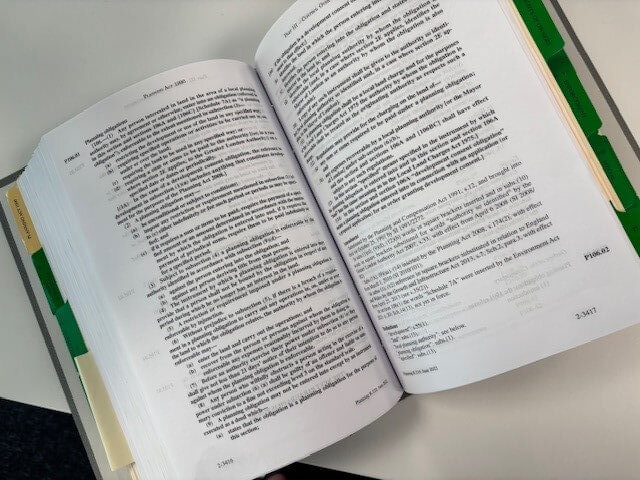
With news showing an increase in the time to deal with s106 agreement by 20% it is suggested that this is due to a lack of capacity in planning departments and inconsistency in planning processes.
Are there inconsistencies?
Without doubt there are inconsistencies. Many Authorities will not allow you to commence work on a legal agreement until conditions have been agreed and reports signed off. This means the legal processes are not starting until after the application has been essentially approved.
Others accept progress on a s106 on a ‘without prejudice’ basis, whilst some won’t accept unilateral undertakings for simple matters such as CPZs.
Nonetheless, it’s not necessarily these processes that are delaying the finalisation of s106 Agreements.
Local Authority solicitors have a part to play
The speed of response from some Local Authority solicitors is problematic, especially at County level where they are awaiting instructions from different departments such as education or highways.
It lacks cohesiveness or due process that ensures timely progression of legal agreements, further compounded by some Authorities still only sealing documents on one day a week!
S106 agreements still have their place
S106 Agreements still have their place in the planning process regardless of CIL, but the time it takes to get an Agreement finalised does not rest solely at the feet of the Local Planning Authority.
Legal fees
Given the cost of legal services are usually paid for by the Applicant it begs the question as to whether the numerous iterations of a document are associated with justifying the costs or simply changes for change’s sake.
We considered appeal decision ref: APP/N0410/W/24/333798, where legal costs were not deemed to be necessary to make a development acceptable, or required in addition to a planning application fee. Would no fees result in a speedier response and less changes for changes sake, to minimise the time spent on a project?
Certainly, food for thought!