The Government’s ambitious plan to build 1.5 million homes over the next five years has certainly caught attention, dominating headlines and sparking intense debate on social media.
However, the response from the business community, particularly on platforms like LinkedIn, has been largely sceptical, especially when it comes to the planning agenda.
It’s been a tough environment for the house building industry and the planning profession in the last few years. In particular, the 2023 update to the National Planning Policy Framework (NPPF) was perceived by many as an almost anti-house building agenda.
Ambitious plans for housebuilding and planning
Under this pressure, the Government has committed to revitalizing the housing market, with a target of 1.5 million homes by the end of the current Parliament. This equates to roughly 450,000 new homes annually by 2028, a considerable leap from the previous government’s struggle to meet their 300,000-home annual target.
Since assuming power, the Government has taken a critical step by revising the National Planning Policy, signalling a shift toward increased housing development.
In the early months of this Parliament, consultations have been conducted, and a revamped NPPF has been published.
This new framework introduces key changes, including an updated methodology for housing delivery, a stronger focus on Local Authorities to produce up-to-date local plans, and adjustments to the Green Belt policy to encourage more residential and commercial development.
Additionally, with ongoing consultations on the role of committees, Nationally Significant Infrastructure Projects (NSIPs), and Compulsory Purchase Orders (CPOs), it’s evident that planning is finally receiving the attention it deserves as a critical tool for driving economic growth.
What does this mean for the green belt?
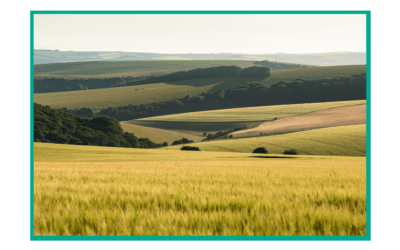
The Green Belt, often misunderstood due to its name, is not a protected landscape in the sense that many assume. While it may sometimes overlap with environmentally sensitive areas, its primary purpose has always been to prevent urban sprawl.
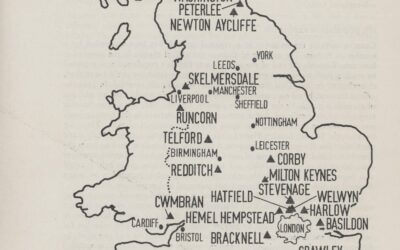
Early in my career up north with the backdrop of the North York Moors, the Metropolitan Green Belt was something that happened down south. But on moving into my first job ‘down south’, I quickly saw the importance of maintaining these open spaces. Without the Green Belt, London could have long since merged with Hertfordshire, erasing the identities of communities.
Historically, the Green Belt, as coined by Octavia Hill in 1875 according to Wikipedia, was intended to create
“a ring of countryside where urbanisation will be resisted for the foreseeable future, maintaining an area where local food growing, forestry and outdoor leisure can be expected to prevail. The fundamental aim of green belt policy is to prevent urban sprawl by keeping land permanently green, and consequently the most important attribute of green belts is their openness”.
While the policy has succeeded in curbing sprawl, it has also constrained housing supply, driving up house prices in high-demand areas.
Being able to now look at sites and consider whether they add value to the Green Belt purposes or could be classed as grey belt, is a positive. Let’s keep the land that has a material value, rather than all land that is protected for the sake of being protected.
However, the focus has largely shifted online from the Green Belt debate to the Government’s 1.5 million homes target. Critics arguing that this goal is unachievable is frustrating. Without doubt, it’s ambitious. It will undoubtedly require Local Authorities to seek to work with applications and truly engage with the revised NPPF. Otherwise, we risk an overwhelmed appeals process, leading to further backlog.
The need for action
But that doesn’t mean we shouldn’t try. It’s crucial that we embrace the challenge of providing housing for current and future generations. Without a collective effort to deliver these homes, many people—our communities, friends, and families —will face skyrocketing house prices and limited access to housing.
Whether these homes take the form of houses, flats or apartments, or even caravans, barns or houseboats, the goal should remain clear: everyone deserves a place to call home.
We should be striving to achieve this instead of focusing on the perceived impossibility of the target. At Barker Parry, we’re committed to contributing to this effort—and we encourage others to do the same.